
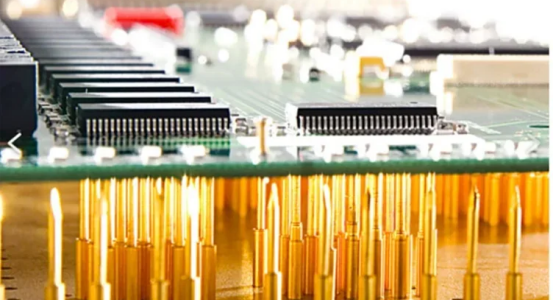
With the explosive growth in demand for artificial intelligence, scientific computing, and high-performance computing, high-density GPU servers have become the core computing engines of modern data centers. By integrating multiple high-performance GPUs into a single chassis, these servers achieve unprecedented parallel computing density. This article will delve into the key technologies of high-density GPU servers from four core dimensions: technical architecture, core hardware, thermal management, and deployment practices.
In this article:Part 1. Technical Architecture and DesignPart 2. In-Depth Analysis of Core Hardware ComponentsPart 3. Thermal Management and Thermal Engineering DesignPart 4. Deployment Practices and Infrastructure Considerations
Technical Architecture and Design
The design objective of high-density GPU servers is to maximize computational power within limited space while ensuring system stability, maintainability, and energy efficiency. Its architectural evolution reflects sophisticated engineering trade-offs.Core Architectural Design:
- Heterogeneous Computing Integration: Adopts a “CPU + multiple GPUs” heterogeneous model. The CPU serves as the control and management center, responsible for task scheduling, I/O, and logical processing; while multiple GPUs serve as parallel computing engines, specializing in large-scale floating-point operations and matrix computations. Modern architectures emphasize high-speed interconnects between CPUs and GPUs to minimize data transfer overhead.
- Modularity and Scalability: The motherboard employs a modular design, typically overcoming the limitations of native CPU PCIe lanes through PCIe switch chips or custom interconnects to support eight or more GPUs. Chassis design incorporates hot-swappable modules for GPUs, power supplies, and thermal management, facilitating maintenance and upgrades.
- Resource Pooling and Sharing: High-speed GPU interconnect technologies like NVLink and Infinity Fabric virtualize the memory and computational resources of multiple GPUs into a larger resource pool, enabling tasks like large-scale model training that exceed the capabilities of a single GPU.
- Density and Space Optimization: Within standard 2U to 4U rack heights, innovative PCB layouts, custom heat sinks, and compact power supplies enable integration of 4 to 8 full-size, full-power GPUs, dramatically increasing rack-level compute density.
The architectural core of high-density GPU servers lies in achieving extreme integration of computational resources within physical constraints. This is not merely a stacking of hardware, but rather the construction of an efficient, collaborative computing unit through heterogeneous computing, modular design, and high-speed interconnects. This provides upper-layer applications with transparent and powerful parallel computing capabilities.

In-Depth Analysis of Core Hardware Components
The performance and stability of high-density servers directly depend on the selection and configuration of their critical hardware components. Below is an analysis of the most essential components beyond the GPU.Critical Hardware Components and Technical Considerations:
GPU Interconnect Technology: This is the lifeline for multi-GPU collaboration efficiency.
- PCIe 4.0/5.0: The foundational communication channel between the CPU and GPU, with Gen5 x16 bidirectional bandwidth reaching up to 128GB/s.
- NVLink (NVIDIA) or Infinity Fabric (AMD): Dedicated high-speed direct-connect channels between GPUs, offering significantly higher bandwidth than PCIe. For example, NVLink 4.0 delivers up to 200GB/s per link. Their topology (e.g., fully connected vs. switched) directly impacts scaling efficiency during multi-card parallel training.

Power Supply Unit (PSU): High density implies high power consumption. An 8-GPU server may exceed 6 kilowatts at peak power draw.
- Implement redundant power designs (e.g., 2+2 configurations) to ensure single-point failures do not disrupt operation.
- Utilize high-efficiency (80 Plus Platinum/Titanium) power supplies to minimize energy loss.
- Equip with 12VHPWR (High Power) connectors to deliver stable power to individual GPUs exceeding 450W.
Motherboard and Topology: The motherboard serves as the backbone connecting all components.
- Implement reinforced power delivery circuits to provide clean, ample power to the CPU and multiple GPUs.
- Expands PCIe lanes via PCIe switch chips or employs multi-CPU architectures to provide ample PCIe lanes.
- Optimizes signal integrity to ensure high-speed signal stability in dense layouts.
Storage and Memory Configuration:
- Configures high-performance NVMe SSD arrays as the GPU’s “data reservoir,” preventing GPU idle time due to slow data loading.
- Paired with high-capacity, high-frequency DDR5 memory to ensure the CPU has ample space for handling meta-tasks and caching data.
Hardware components form the physical foundation of high-density servers. Among these, high-speed interconnects between GPUs that surpass PCIe are essential for efficient parallel computing, while a robust and reliable power delivery system guarantees stable system operation. Motherboard design and storage configuration ensure data flows seamlessly throughout the system to power computational units.
Thermal Management and Thermal Engineering Design
Heat dissipation is one of the most significant engineering challenges facing high-density GPU servers. When thousands of watts of heat are concentrated in a confined space, effective thermal management becomes the decisive factor for system stability.Mainstream Cooling Solutions and Technical Details:
Forced Air Cooling: The most traditional and widely adopted solution.
- Design Considerations: Meticulously design air ducts and internal airflow paths to ensure cold air flows uniformly and systematically through each GPU heatsink. Utilize high-pressure, high-airflow fans, typically configured with N+1 redundancy.
- Advantages: Lower cost, simple deployment, and easy maintenance.
- Limitations: Limited cooling capacity (typically single GPU power consumption ≤400W), high noise levels, and stringent requirements for data center ambient temperature.
Cold Plate Liquid Cooling: The current mainstream high-efficiency cooling solution.
- Design Key Points: Install metal cold plates with precision internal channels on GPUs and CPUs. Coolant absorbs heat within the cold plates, then circulates through piping to an external cooling distribution unit (CDU) for heat exchange before returning cooled.
- Advantages: Extremely high cooling efficiency, capable of handling GPU power consumption exceeding 500W; significantly reduces fan noise and data center air conditioning energy consumption.
- Limitations: High initial deployment cost, leakage risk (requires detection systems), increased maintenance complexity.
Immersion Liquid Cooling: The ultimate cooling solution.
- Design Essentials: Entire server motherboards are submerged in dielectric coolant, where heat is directly absorbed and circulated for cooling.
- Advantages: Exceptional cooling capacity, near-silent operation, uniform and stable component temperatures, enabling further compute density increases.
- Limitations: Extremely high cost, coolant may require specialized handling, complex maintenance and hardware replacement procedures.

Selecting a thermal solution involves balancing performance, cost, and operational requirements. Air cooling suits low-to-medium density and budget-sensitive scenarios; cold plate liquid cooling is the mainstream choice for today’s ultra-high-power GPUs, effectively overcoming air cooling limitations; while immersion liquid cooling represents a potential future direction for extreme-density data centers. Intelligent thermal management systems serve as the brain of all solutions, dynamically adjusting to optimize cooling efficiency while minimizing energy consumption.
Deployment Practices and Infrastructure Considerations
Successfully deploying high-density GPU servers involves far more than simply racking and powering them on; it requires a comprehensive reassessment and adaptation of the entire infrastructure layer.Key Deployment Challenges and Best Practices:
Power Infrastructure Upgrades:
- Capacity: Power requirements per cabinet may surge from traditional 5-8kW to 20-30kW or higher. Evaluate and upgrade the entire power chain from utility feed-in points through distribution panels to cabinet PDUs.
- Circuitry: Deploy independent, multi-path redundant circuits for each high-density cabinet, avoiding sharing with other loads.
- Monitoring: Install smart PDUs with granular metering capabilities to monitor power consumption in real-time at the cabinet and server levels.
Cooling System Adaptation:
- Air-Cooled Scenarios: Ensure sufficient cooling capacity from the data center air conditioning system. Optimize hot/cold aisle containment to prevent hot air recirculation. Cabinets should feature high-ventilation front and rear doors.
- Liquid-cooled scenarios: Plan CDU (Coolant Distribution Unit) placement and piping routes. Deploy leak detection and emergency drainage systems. Account for the liquid cooling system’s own power consumption and heat dissipation.
Physical Load Capacity & Space:
- Fully loaded high-density servers are remarkably heavy. Verify the data center floor’s load-bearing capacity (typically ≥1000kg/㎡).
- Allow sufficient front and rear maintenance space, especially at the rear, as liquid-cooled servers may require additional clearance for quick-connect fittings.
Operations and Management Model Transformation:
- Centralized Monitoring: Establish a unified platform to monitor critical metrics for all servers, including GPU temperature, power consumption, utilization, and liquid cooling system flow/temperature.
- Failure Prediction: Utilize sensor data for early fault warnings to proactively schedule maintenance windows.
- Process Updates: Develop specialized safety protocols for liquid cooling system maintenance and high-power equipment replacement.
Deploying high-density GPU servers constitutes a systematic engineering endeavor. It compels data centers to upgrade infrastructure, shifting from merely “providing space for IT equipment” to “delivering a support platform for high-density computing power.” Successful deployment begins with meticulous planning and design, is executed through rigorous engineering implementation, and relies on refined intelligent operations and maintenance.


