
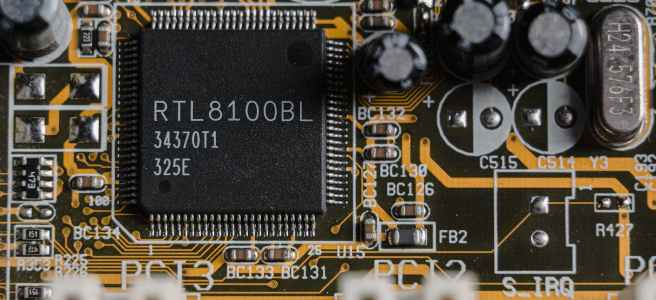
An AI air conditioning control chip detects human presence in real time, intelligently adjusting airflow direction while identifying unoccupied zones to automatically switch to high-efficiency energy-saving mode. From millisecond-level anomaly detection in industrial robots to traffic signal optimization in smart transportation systems, these complex tasks no longer rely on cloud-based processing but are locally executed by the IoT chips embedded within the devices themselves. The technological revolution unfolding on this silicon chip—measuring less than one square centimeter—far exceeds imagination.
In this article:Part 1. Core Elements and Design Guidelines for PCB Drill Hole DimensionsPart 2. Modern PCB Drilling Technology and Advanced StandardsPart 3. Drill Dimension Design Rule Check (DRC) and Manufacturability
Architecture Fundamentals
IoT chips can be understood as the “neural network” and “sensory system” of smart devices. Although market classifications are diverse, their core functions can be categorized into four pillars: SoC/MCU for data computing and control, communication chips for connectivity, sensors for environmental perception, and AI accelerators that drive edge intelligence.
The System-on-a-Chip is regarded as the “brain” of the IoT device. It integrates multiple critical system components—such as CPU, GPU, NPU, memory, baseband, ISP, DSP, Wi-Fi, and Bluetooth—onto a single chip, serving as the core for enabling comprehensive intelligent functionalities.
The Microcontroller Unit acts as the “cerebellum”, responsible for data collection and control execution, assisting the SoC in completing specific tasks. Its characteristics include high performance, low power consumption, programmability, and high flexibility, ranging from 4-bit to 64-bit architectures, with 8-bit and 32-bit being predominant in the current market.
Connectivity is the lifeline of the Internet of Things. Communication chips serve as the hub for data transmission and are crucial for enabling remote interaction. Different communication technologies are suited for different scenarios: Wi-Fi and Bluetooth technologies held a 67.3% market share in 2020 due to their maturity and convenience; meanwhile, with the reduction in cellular network traffic costs, the adoption of technologies such as NB-IoT and LTE Cat.1 has also increased year by year, reaching 8.75%.
Sensor technology, as the starting point for connecting objects, has evolved from structural sensors to solid-state sensors, and further to today’s intelligent sensors. Modern sensors can receive various physical sensing signals (such as temperature, humidity, motion, and light) and convert them into electrical signals, providing the raw data foundation for higher-level intelligent decision-making.

Market Landscape
The global IoT chip market exhibits a highly concentrated characteristic, dominated by a handful of international giants. According to market analysis, Qualcomm leads the market with a 17.8% share, closely followed by Intel at 15.2%. These corporations have established formidable market control through continuous mergers and acquisitions, technological partnerships, and ecosystem development.

Intel, leveraging the synergy between its cloud and edge computing platforms, holds a leading position in overall capabilities. However, this established landscape is increasingly being challenged and reshaped by emerging domestic enterprises, particularly from China.
From the perspective of enterprise distribution, China’s IoT chip companies are predominantly clustered in the developed coastal regions of the East. Guangdong, capitalizing on its robust electronics and information industry foundation and a well-developed IoT supply chain, hosts 36% of the nation’s related enterprises, ranking first. Jiangsu and Shanghai follow with 13% and a significant share respectively, collectively forming a comprehensive ecosystem spanning chip design, manufacturing, and application implementation.
In recent years, the number of Chinese IoT chip enterprises has experienced explosive growth. Starting in 2020, driven by a combination of policy support, strong market demand, and the push for import substitution, a significant number of players have entered this field. By 2024, the number of registered related enterprises has reached a record high of 782.
In terms of market performance, the profitability of Chinese IoT chip enterprises remains stable. Over the past five years, the gross profit margin of representative listed companies has consistently fluctuated between 36% and 42%, demonstrating healthy and sound development. The continuous advancement of technologies like IoT and AI fuels a growing market demand for IoT chips, opening up vast profitable opportunities for these companies.
Looking at the balance between production and sales, the Chinese IoT chip market as a whole maintains a state of equilibrium between supply and demand. Leading companies, supported by their technical prowess and effective market strategies, have achieved a healthy state of robust production and sales alongside reasonable inventory levels. According to forecasts from the research firm IC Insights, the Chinese IoT chip market is expected to double by 2025, reaching 125.942 billion yuan.

Dual-Driven by Edge AI and Open Architecture
The comprehensive integration of Edge AI is becoming the core direction of IoT chip development. Unlike traditional IoT devices, new system-on-chips integrate lightweight NPUs, vector extensions, and DSP-like AI cores, enabling devices to complete tasks such as anomaly detection and visual analysis locally, reducing reliance on the cloud.
A typical example is NXP’s i.MX8m Plus SoC, which integrates a neural processing unit and an image signal processor on a single chip. This combination provides the processor with efficient AI inference capabilities and advanced image processing functions, supporting on-device artificial intelligence processing without depending on cloud connectivity, ensuring real-time inference and privacy protection.

At the architectural level, the rise of the RISC-V open instruction set architecture is reshaping the design landscape of IoT chips. RISC-V offers inherent advantages such as high customizability, low power consumption, high flexibility, and low licensing costs. As global emphasis on supply chain autonomy increases, more and more chip designers are transitioning from traditional architectures to RISC-V.
Chinese companies are actively participating in this trend. For instance, HiSilicon has launched MCU chips based on its self-developed RISC-V core for applications in smart home appliances and industrial control. Its Hi3066M chip targets the intelligent needs of home appliance endpoints, featuring a built-in eAI engine that brings innovative applications like AI energy saving and smart detection to air conditioners, refrigerators, washing machines, and other appliances.
Power optimization has become a rigid requirement in chip design. The need for long-term operation of IoT terminal devices drives continuous improvements in standby power consumption and dynamic energy efficiency ratios. The ESP32 chip is highly regarded for its unique combination of ultra-low power operation and integrated Wi-Fi/Bluetooth IoT applications. It incorporates advanced power management features, including fine-grained clock gating and multiple power modes, to minimize energy consumption.
Application Frontiers
In the wave of Industry 4.0, IoT chips play a pivotal role in intelligent upgrades. Advanced IoT chips support factory equipment to achieve millisecond-level anomaly detection. Combined with digital twin technology, they enable predictive maintenance, which is estimated to reduce downtime losses by over 30%. Edge AIoT analyzes equipment data in real-time and optimizes production lines, becoming the invisible engine driving efficiency improvements in manufacturing.
Smart city governance also relies on high-performance IoT chips. In the field of transportation, real-time processing of multiple video streams through roadside units can optimize traffic light control, potentially increasing road traffic efficiency by 20%. From environmental monitoring to public safety, from smart lighting to waste management, IoT chips enable urban management to transition from “passive response” to “proactive prevention”.
The healthcare sector has witnessed revolutionary breakthroughs driven by IoT chips. Wearable devices, leveraging the local AI analysis capabilities of chips, can provide real-time alerts for abnormal electrocardiograms while reducing data transmission volume by 80%. This not only improves response speed but also better protects patient privacy. Applications such as medical patches and remote monitoring devices make “preventive healthcare” and “personalized health management” possible.
In smart home scenarios, IoT chips are evolving from simple connection control to intelligent sensing. Devices equipped with edge AI chips can learn user habits, understand environmental changes, and enable truly intelligent interactions. From air conditioners that automatically adjust temperature to refrigerators that detect food freshness, and proactive security cameras, IoT chips turn homes into “aware” spaces.
Vehicle networking and autonomous driving are driving demand for chips with high bandwidth and low latency. Technologies like 5G NR-Light are becoming a focus for vehicle networking, with major chip manufacturers having launched dedicated automotive-grade solutions. Rockchip’s smart cockpit chip RK3588M, for example, covers a range of computing power needs from 10K to 300K DMIPS, suitable for diverse applications such as automotive instrumentation, smart cockpits, and central control systems.
| Category | Core Function | Typical Applications |
| SoC | Device “brain”, integrates multiple functions | Smart speakers, High-end cameras |
| MCU | Data collection, control execution | Smart home appliances, Industrial control |
| Communication Chip | Device networking, data transmission | Shared bikes, Wearable devices |
| AI Accelerator | Accelerates local AI computing | Facial recognition, Industrial inspection |
| Sensor Chip | Perceives environmental information | Environmental monitoring, Health devices |
Modern IoT chips are becoming increasingly “intelligent.” They are no longer just remotely controlled “switches,” but have acquired their own “eyes” and “brains,” enabling them to understand what’s happening around them and make their own judgments and reactions. This upgrade from “connecting” to “understanding you” is making all devices in our factories, cities, and homes truly intelligent, bringing the life depicted in science fiction movies step by step into reality.

 Everything About PCBA Electronic Manufacturing